
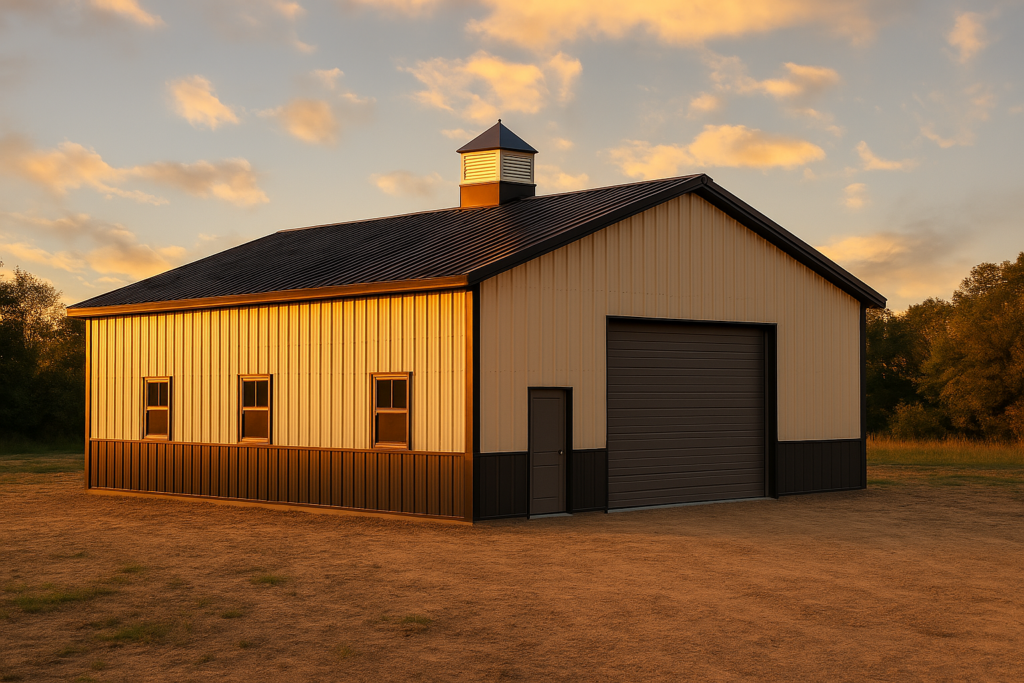
Cost-Effective Strategies for Building a Pole Barn
Smart Ways to Save Without Sacrificing Quality
Building a pole barn is one of the most versatile and cost-effective ways to add functional space to your property, whether you’re planning a garage, workshop, storage shed, horse barn, or even a home. But as with any construction project, costs can creep up quickly if you’re not careful. Fortunately, there are practical strategies you can use to keep your project on budget without cutting corners.
In this article, we’ll break down smart, budget-friendly building practices to help you maximize value without compromising on quality or durability.
1. Start with a Clear Plan and Budget
Before breaking ground, invest time in planning. Decide how you intend to use the building, what features are essential, and what can be postponed or phased in later. A detailed plan will help avoid change orders, unexpected costs, and project delays.
Tips:
-
- Use 3D design tools or work with a design-build team to visualize your layout.
-
- Make a “must-have” vs. “nice-to-have” list to prioritize.
-
- Factor in site preparation, permits, utilities, and long-term maintenance.
2. Choose an Efficient Building Size
Larger buildings come with larger costs, not just in materials, but also in labor and ongoing maintenance. If your budget is tight, consider scaling back your footprint or going taller rather than wider to maximize usable space.
Tips:
-
- Opt for standard dimensions (like 30×40 or 40×60) to avoid custom material cutting.
-
- Use a loft or mezzanine for additional storage without expanding the building’s footprint.
3. Select the Right Building Site
A well-chosen site can save you thousands in excavation, grading, and foundation costs.
Tips:
-
- Choose a location with good drainage to reduce the need for extensive site work.
-
- Avoid steep slopes and areas with poor soil unless you budget for extra engineering.
-
- Position the building to minimize driveway length and utility hookups.
4. Work with a Design-Build Company
Partnering with a design-build contractor ensures that the design is tailored to your budget from the start. This integrated approach reduces miscommunication and ensures smarter material choices and construction methods.
Tips:
-
- Ask if the builder can suggest pre-engineered components or packages.
-
- Ensure they offer transparent, itemized quotes.
5. Use Durable, Low-Maintenance Materials
Investing in quality materials may cost more upfront but can save you money over the long haul by reducing maintenance and replacement costs.
Tips:
-
- Use steel siding and roofing for longevity and minimal upkeep.
-
- Choose treated posts or concrete pier foundations to prevent rot.
-
- Use high-performance windows and doors to improve energy efficiency.
6. Optimize Insulation and Ventilation
If your building will be heated or cooled, insulation and ventilation will significantly impact long-term energy bills.
Tips:
-
- Use closed-cell spray foam or blown-in insulation for better R-values.
-
- Include ridge vents, eaves, and proper airflow to reduce moisture and prevent mold.
Can’t afford everything right away? That’s okay. Design your building for future upgrades. For example, you can rough-in plumbing or electrical now and complete the interior finish-out later.
Tips:
7. Consider a Phased Approach
-
- Install a basic shell now with expansion in mind.
-
- Design trusses to support future lofts, or frame in window/door openings that can be added later.
8. Take Advantage of DIY Opportunities
If you have experience—or even just time and a willingness to learn—there may be parts of the project you can tackle yourself, such as painting, landscaping, or even interior framing.
Caution: Only DIY tasks that won’t compromise structural integrity or violate local codes.
9. Watch for Seasonal Discounts or Package Deals
Some suppliers and builders offer discounts during off-peak seasons or for bundled packages. Don’t hesitate to ask.
Tips:
-
- Ask about last year’s model discounts on pre-fab kits.
-
- Look for pre-designed floor plans to reduce drafting and engineering costs.
Building Smart Pays Off
Building a pole barn doesn’t have to break the bank. With careful planning, smart material choices, and the right team, you can create a highly functional and attractive building that meets your needs and stands the test of time. Budget-conscious doesn’t mean cutting corners, it means building smart.